
How to Learn Fitness as a Lifestyle Habit Rather Than a Short-Term Goal
Fitness becomes sustainable when it stops feeling like a temporary project and starts becoming a regular practice.
A workout is one event. A program has a beginning and an end. A challenge usually depends on urgency, motivation, or a deadline.
A practice is different.
A practice is something you return to repeatedly because it continues to develop you. You do not expect to complete it permanently. You gradually become more capable, more confident, and more comfortable within it.
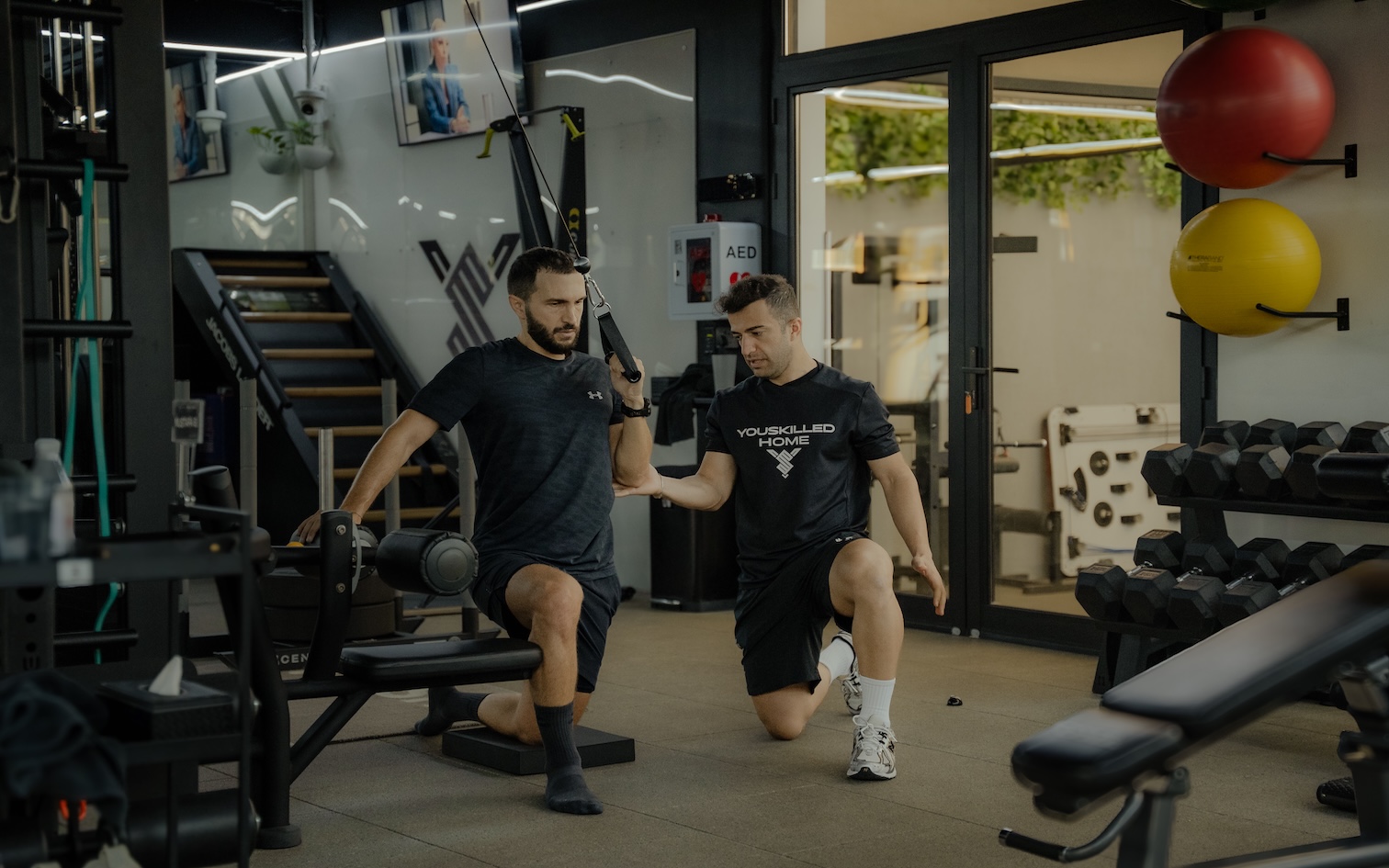
This is how YouSkilled approaches long-term fitness.
Practice creates skill. Skill creates comfort. Comfort creates enjoyment. Enjoyment creates a lasting habit.
The objective is not to force yourself through exercise forever. It is to practice long enough, and intelligently enough, that movement becomes familiar, valuable, and increasingly natural.
Why Short-Term Fitness Goals Often Fail
Short-term goals can be useful.
A person may want to lose weight before an event, prepare for a holiday, complete a challenge, or return to exercise after a long break. A clear target can create urgency and provide direction.
The problem begins when the target is the only reason to train.
Once the event passes, motivation often falls. The person has completed the challenge, but they have not necessarily developed the skills, routines, confidence, or enjoyment required to continue.
This creates a familiar pattern:
- The person becomes dissatisfied.
- They begin an aggressive program.
- They train harder than their current capacity supports.
- Fatigue, soreness, work pressure, or boredom interrupts the plan.
- They stop.
- Several weeks or months later, they begin again.
The issue is not always discipline.
Often, the person has been taught to chase an outcome without learning how to practise fitness as part of normal life.
Fitness Is Not Only Something You Do
To make fitness a lifestyle, it cannot remain only a scheduled visit to a gym.
It must gradually become part of how you understand and care for yourself.
That means learning:
- how your body responds to effort;
- how to control basic movements;
- how to breathe under physical demand;
- how to choose an appropriate level of intensity;
- how to recognise fatigue without fearing it;
- how to adjust when sleep or stress is poor;
- how to return after travel or disruption;
- how to maintain physical capacity without constantly starting over.
The more of these abilities you develop, the less dependent you become on temporary motivation.
You are no longer simply completing workouts.
You are becoming physically skilled.
The YouSkilled Four-Step Habit Cycle (YouSkilled Loop)
The YouSkilled approach to long-term consistency follows four connected steps:
- Practice creates skill.
- Skill creates comfort and confidence.
- Comfort creates enjoyment.
- Enjoyment supports a lifetime habit.
These stages are not rigid. They overlap and reinforce one another. However, they provide a practical explanation for why fitness often becomes easier to maintain only after a person has practiced it consistently.
Step 1: Practice Creates Skill
Practice means returning to physical training regularly enough for the body and mind to learn.
At the beginning, exercise can feel complicated.
The person may be thinking about:
- where to place their feet;
- how to hold their posture;
- when to breathe;
- which muscles they should feel;
- how quickly to move;
- whether they are doing the exercise correctly;
- whether the fatigue they feel is normal;
- how much resistance they should use.
This creates significant mental friction.
Even a basic exercise may require substantial concentration because the movement is unfamiliar.
Through repetition, the person begins to develop physical skill.
Movement becomes more coordinated. Breathing becomes easier to organize. Balance improves. The person understands instructions more quickly and recognizes familiar training sensations.
Practice may gradually improve several qualities:
- movement control;
- coordination;
- balance;
- rhythm;
- strength;
- mobility;
- cardiovascular capacity;
- body awareness;
- pacing;
- recovery between efforts.
Behavioral research supports the basic principle that habits develop through repeated behavior in recurring contexts. Consistency of context—such as training at a similar time, place, or point in the daily routine—can help a behavior become more automatic. (PubMed)
The practical message is:
Do not wait until training feels natural before you practice. Training begins to feel natural because you practice.
What Practice Looks Like at YouSkilled
Practice does not mean repeating the exact same workout indefinitely.
It means consistently revisiting important physical abilities while gradually changing the challenge.
A member may practice a movement through:
- bodyweight resistance;
- a supported position;
- a slower tempo;
- a greater range of motion;
- additional external load;
- increased speed;
- reduced stability;
- more complex coordination;
- longer periods of work;
- controlled performance under fatigue.
The movement remains connected to a familiar foundation, but the member’s capability expands.
Step 2: Skill Creates Comfort and Confidence
Skill creates assurance.
When you know how to perform a movement, you no longer approach it with the same uncertainty. You have evidence that your body can complete the task.
For example, a beginner may initially struggle to coordinate a squat.
With practice, the person learns to control their feet, knees, hips, trunk, breathing, and depth. Later, they may perform the movement with additional resistance, greater speed, a different stance, or in combination with another exercise.
The movement becomes more demanding, but it no longer feels completely unfamiliar.
This creates confidence.
Confidence does not mean believing that every task will be easy. It means trusting that you can engage with the task, adjust, learn, and improve.
Research on physical activity has repeatedly connected self-efficacy—the belief that one can successfully perform a behavior—with exercise participation. Enjoyment and confidence can both support future physical activity, although enjoyment may become an especially important predictor over time. (PubMed)
Physical Confidence Is Earned Through Experience
A coach can encourage someone, but confidence cannot be built only through positive language.
The member needs successful experiences.
They need to feel:
- “I can perform this movement.”
- “I know how to adjust the weight.”
- “I recognise this type of fatigue.”
- “I can recover after this effort.”
- “I can return even after missing several days.”
- “My body is becoming more capable.”
Each successful repetition provides evidence.
Over time, that evidence changes the member’s relationship with training.
The gym is no longer a place where their limitations are exposed. It becomes a place where their capabilities are developed.
Step 3: Comfort Creates Enjoyment
Enjoyment is difficult when every part of training feels unfamiliar, threatening, or exhausting.
A beginner may spend most of the session managing basic coordination, breathing, discomfort, embarrassment, and uncertainty. They are not yet free to enjoy the experience because so much attention is required simply to cope with it.
As skill and fitness develop, this burden reduces.
The person no longer needs to think consciously about every detail. They can move with more rhythm, engage with the challenge, notice progress, and experience the satisfaction of performing well.
Comfort does not mean the workout contains no difficulty.
It means the member is familiar enough with training that difficulty no longer dominates the entire experience.
The person may begin to enjoy:
- learning a new movement;
- feeling stronger;
- completing a demanding sequence;
- moving with rhythm;
- seeing improvement;
- training with a trusted coach;
- feeling mentally clearer after the session;
- experiencing controlled physical effort;
- recognizing that their body can do more than before.
Positive feelings during exercise are associated with future physical activity. Research suggests that how someone feels during the session—not only after it finishes—can influence whether they are likely to repeat the behavior. (PubMed)
This is one reason intensity should be individualized.
A training level that feels stimulating and satisfying to one member may feel threatening or intolerable to another. Individually adjusted workloads can support enjoyment, autonomy, and the intention to continue exercising. (PMC)
Enjoyment Does Not Mean Entertainment
YouSkilled does not define enjoyable training as training that must always be easy, playful, or comfortable.
Enjoyment can include the satisfaction of:
- doing something difficult;
- maintaining control under fatigue;
- improving a technical skill;
- completing work that previously felt impossible;
- experiencing discipline;
- seeing the body become more capable.
The aim is not to remove challenge.
The aim is to make challenge meaningful and manageable.
Step 4: Enjoyment Creates a Lifetime Habit
When a behavior provides regular value, repeating it becomes more natural.
The member no longer trains only because they are afraid of gaining weight or missing a deadline.
They train because the practice gives them something they recognise and appreciate:
- energy;
- structure;
- confidence;
- mental clarity;
- movement;
- physical capability;
- personal time;
- a sense of progress;
- connection with their coach and environment.
At this point, training begins to move from something the member must force into life toward something that supports life.
Habit formation does not happen on a fixed schedule for everyone. A recent systematic review found substantial individual variation, with commonly reported averages extending beyond the popular idea that a habit forms in only 21 days. (PubMed)
This matters because people often give up too early.
They expect exercise to become automatic after a few weeks. When it still requires effort, they assume they have failed.
In reality, the transition from deliberate behavior to greater automaticity usually requires repeated performance over time. As automaticity develops, people often experience the behaviour as less mentally demanding. (PubMed)
The objective is not to reach a point where training requires no choice at all.
The objective is to reduce the amount of internal negotiation required to begin.
Practice → Skill → Comfort → Enjoyment → Habit
The complete YouSkilled cycle looks like this:
Stage
What Happens
What the Member Begins to Feel
Practice
The member repeats movements and training routines consistently
“This is becoming familiar.”
Skill
Coordination, control, pacing, strength, and awareness improve
“I know what I am doing.”
Comfort
Training requires less unnecessary mental and physical effort
“I can handle this.”
Enjoyment
The member experiences challenge, progress, and satisfaction
“This adds something positive to my life.”
Habit
Training becomes part of the member’s normal identity and routine
“This is simply something I do.”
The most important point is that enjoyment is not always available at the beginning.
Sometimes it must be developed.
A person may need to move through awkwardness, uncertainty, and low capacity before training begins to feel rewarding.
That is not a reason to make the process unnecessarily punishing. It is a reason to make the early experience appropriately structured.
Why Trying to Progress Too Quickly Can Break the Cycle
Once people begin to feel more confident, they often want to accelerate the process.
They may assume that greater danger, heavier weight, more complicated movements, or extreme intensity will produce faster development.
Sometimes an increased challenge is appropriate.
However, difficulty should rise because the member is ready—not because complexity or risk looks impressive.
Rushing progress can break the habit cycle:
- The member practices consistently.
- They begin to feel capable.
- They increase several demands too quickly.
- Technique deteriorates or fatigue becomes excessive.
- Training becomes uncomfortable and unpredictable again.
- Enjoyment falls.
- Consistency is interrupted.
Skill should create access to greater challenges, but greater challenge should not replace skill.
The YouSkilled question is:
What is the next level that this member can practice successfully and repeat consistently?
Not:
What is the hardest possible variation they can survive today?
Progress Without Unnecessary Risk
A movement can become more demanding through:
- slightly heavier resistance;
- additional repetitions;
- greater movement range;
- improved precision;
- slower control;
- faster execution where appropriate;
- reduced assistance;
- greater stability demands;
- more complex combinations;
- longer work duration;
- shorter rest periods.
These variables do not all need to increase together.
A skilled coach selects the next challenge according to the member’s readiness, movement quality, recovery, and purpose.
Physical Culture and Intellectual Culture
People generally accept that intellectual development requires lifelong practice.
We read, study, solve problems, develop professional expertise, and continue learning even though there is no final moment when knowledge is “completed.”
Physical development can be understood in the same way.
Physical culture includes learning:
- how the body moves;
- how it adapts;
- how to apply effort;
- how to maintain discipline;
- how to tolerate discomfort;
- how to recognise limitations;
- how to develop capability;
- how to recover;
- how to remain physically engaged with life.
Training can therefore offer more than a change in appearance.
It can become a source of education, self-knowledge, experience, and enjoyment.
Intellectual culture expands how we understand the world. Physical culture expands how we experience and participate in it.
When both are developed, everyday life becomes richer.
How YouSkilled Helps Members Build the Habit
At YouSkilled, consistency is not left entirely to motivation.
The training environment is structured to reduce friction and make continued participation more practical.
1. A Consistent Place
Training in a familiar private environment reduces the uncertainty that many people experience in a crowded commercial gym.
The member knows:
- where to go;
- who will guide them;
- what equipment is available;
- what standard of service to expect;
- how the session will be organized.
2. A Consistent Coaching Relationship
The coach provides direction, feedback, progression, and accountability.
The member does not need to design a new workout every time or decide which fitness trend to follow.
3. Adaptable Training
The session can change according to:
- energy;
- sleep;
- soreness;
- work pressure;
- travel;
- physical limitations;
- current goals;
- training experience.
Consistency is protected because the member is not required to arrive in perfect condition every time.
4. Manageable Progression
Exercises become more challenging as the member becomes ready.
Progress is not limited to adding weight. It may also include improved control, endurance, mobility, movement quality, recovery, or confidence.
5. Positive Training Experiences
The goal is not to make every session easy.
The goal is to create a training experience the member can value and realistically repeat.
A Practical Blueprint for Making Fitness Feel Natural
Begin With a Repeatable Schedule
Choose a frequency that can survive normal life rather than a perfect week.
Two consistent sessions are more valuable than five sessions followed by several weeks of inactivity.
Use Stable Cues
Connect training to a reliable point in the day:
- before work;
- after dropping children at school;
- during a lunch break;
- immediately after work;
- at the same time on selected days.
Consistent contexts can help the behaviour become more automatic. (PubMed)
Keep Early Training Manageable
Do enough to create progress, but not so much that the member begins associating exercise with disruption and punishment.
Repeat Foundational Movements
Familiarity develops through practice.
Variety can keep training interesting, but constant randomness can prevent the member from recognizing progress and building confidence.
Record More Than Body Weight
Track improvements in:
- movement quality;
- strength;
- work capacity;
- mobility;
- recovery;
- confidence;
- attendance;
- enjoyment;
- energy during daily life.
Adjust Rather Than Abandon
When work becomes stressful or sleep is poor, reduce the training demand instead of automatically stopping completely.
Allow Enjoyment to Develop
Do not assume every person will love exercise immediately.
Help the member find satisfaction through mastery, progress, connection, and appropriate challenge.
Think in Years, Not Challenges
Short-term goals can remain useful, but they should sit inside a longer physical practice.
Fitness Goal Thinking vs Fitness Practice Thinking
Short-Term Goal Thinking
“I need to get in shape quickly.”
Training depends on urgency
Success means reaching one number
A missed session feels like failure
Exercise is something to complete
Difficulty is increased as quickly as possible
Motivation starts the process repeatedly
Training ends when the goal is reached
The body is treated as a temporary project
Exercise competes with life
Lifestyle Practice Thinking
“I am developing my body over time.”
Training follows a repeatable structure
Success includes capability and consistency
A missed session is followed by a return
Exercise is something to practise
Difficulty is increased when it can be controlled
Routine reduces the need for repeated restarts
Goals change while the practice continues
The body is treated as a lifelong responsibility
Exercise is designed to support life
Frequently Asked Questions
How can I make exercise feel natural?
Exercise begins to feel more natural through repeated practice in a consistent context. Familiar movements, a stable schedule, manageable intensity, and a supportive training environment can reduce the mental effort required to begin.
Why do I keep starting and stopping fitnesss?
You may be choosing programs built around urgency, excessive intensity, unrealistic frequency, or one temporary outcome. Long-term consistency usually requires a repeatable schedule, appropriate progression, and a form of training you can gradually learn to value.
How long does it take to build an exercise habit?
There is no universal number. Research shows substantial variation between individuals and behaviors. Habit formation may take several months rather than a fixed 21-day period. (PubMed)
Do I need to enjoy exercise before I can become consistent?
Not necessarily. Enjoyment can grow as movement becomes more familiar and you become more capable. Early consistency may depend more on structure and coaching, while later consistency can increasingly be supported by confidence and enjoyment.
Should every workout feel comfortable?
No. Productive training includes challenge and temporary discomfort. The difference is that the difficulty should be appropriate enough to support progress rather than repeatedly making the activity feel threatening or unsustainable.
Is motivation necessary for a fitness lifestyle?
Motivation can help someone begin, but it changes from day to day. A stable routine, consistent cues, coaching, and greater behavioral automaticity can reduce dependence on motivation alone.
Can fitness become part of my identity?
Yes. When training becomes a recurring practice that reflects your values and gives you recognised benefits, it can gradually become part of how you see yourself rather than simply something you occasionally do.
The YouSkilled Philosophy
Fitness should not remain a temporary response to dissatisfaction.
It can become a physical practice through which a person develops skill, confidence, capability, and a deeper relationship with their body.
You do not need to love every exercise or feel motivated for every session.
You need to continue practicing at a level that allows learning to happen.
Practice creates skill.
Skill creates confidence and comfort.
Comfort creates the space for enjoyment.
Enjoyment makes repetition easier.
Repeated long enough, training stops feeling like a temporary project and begins to feel like part of who you are.
Do not chase the feeling of finishing fitness. Build the ability to keep practicing it.
Make Fitness Part of How You Live
YouSkilled Home provides structured personal training in Dubai for people who want exercise to become a sustainable and valuable part of everyday life.
Our coaches help members develop movement skill, physical confidence, strength, endurance, mobility, and a training routine that can adapt to real work and family responsibilities.