
How Do I Return to Training After a Long Break?
Returning to training after a long break is not about trying to recover your old fitness in the first week.
The body needs time to remember how to work again.
The best approach is simple:
start moving, create a little demand, let the body adapt, and then gradually do more.
1. Start by getting the body moving
The first sessions should feel like a reintroduction rather than a test.
Choose an activity that is comfortable and available to you: walking, cycling, rowing, or another form of light cardiovascular work.
Start with around 15 to 30 minutes at a manageable pace.
The purpose is to raise your body temperature, increase circulation, and get used to sustained movement again.
You should finish feeling that you have done some work, not that you have emptied the tank.
2. Add mobility
After the cardiovascular work, spend some time moving the major joints through comfortable ranges.
Simple hip, shoulder, ankle and spine movements are enough.
The goal is to remind the body that movement is part of the day again.
At this stage, you do not need a complicated program.
Move, breathe, restore range, recover.
3. Give the body time to adapt
The first few sessions may produce stiffness and fatigue because your current capacity is different from what it used to be.
That is normal.
Give the body several sessions to adapt before adding significantly more work.
For some people, that first adaptation happens quickly. For others, it takes longer.
The important thing is to progress from your current capacity, not from the level you remember having before the break.
4. Reintroduce simple bodyweight strength
Once basic movement feels comfortable, start adding simple exercises that you can control well.
Static exercises are a useful starting point:
- planks
- wall sits
- supported holds
- other simple isometric positions
Start with manageable holds for a few sets.
You are teaching the body to create tension and control positions again.
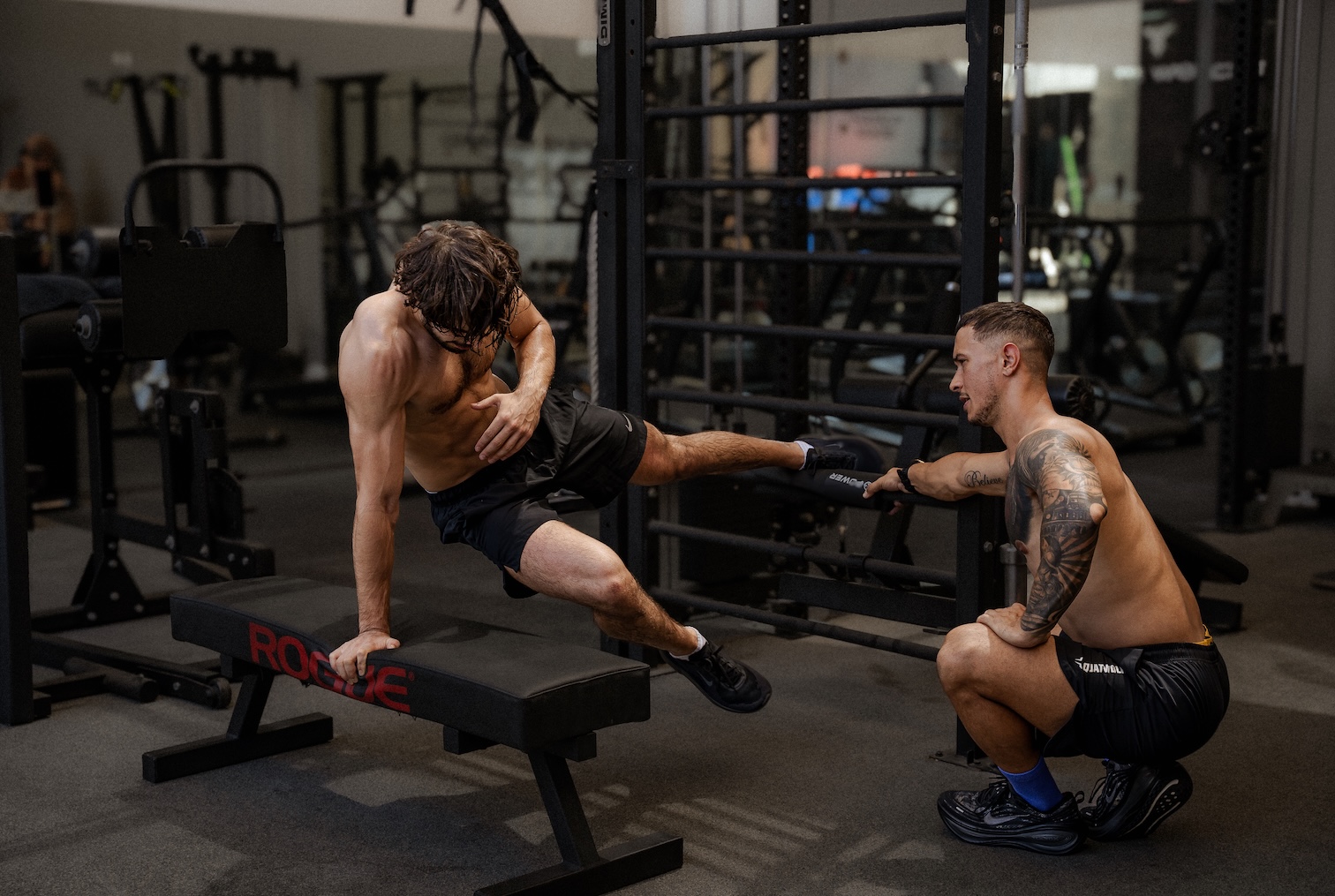
5. Move from static to dynamic work
Once those positions feel comfortable, introduce movement.
That can mean:
- squats
- lunges
- push-ups
- rows
- step-ups
- controlled bodyweight patterns
Start with a small number of repetitions and gradually increase the total amount of work.
Then begin introducing external resistance when the movement is ready for it.
The progression is:
movement → control → repetition → resistance → capacity
6. Build back toward normal training
As the weeks pass, you can gradually increase:
- duration
- repetitions
- resistance
- movement complexity
- conditioning
- training frequency
You are no longer just returning to exercise.
You are rebuilding physical capacity.
For many people, a meaningful return to previous performance can take several weeks to a couple of months, depending on how long they were inactive, their age, health, previous training level, and how consistently they train.
There is no need to rush it.
The YouSkilled principle
Don't train according to the body you remember. Train according to the body you have today.
Start with what you can control.
Let the body adapt.
Then give it a little more.
That is how you return to training without turning the first week back into the reason you stop again.