
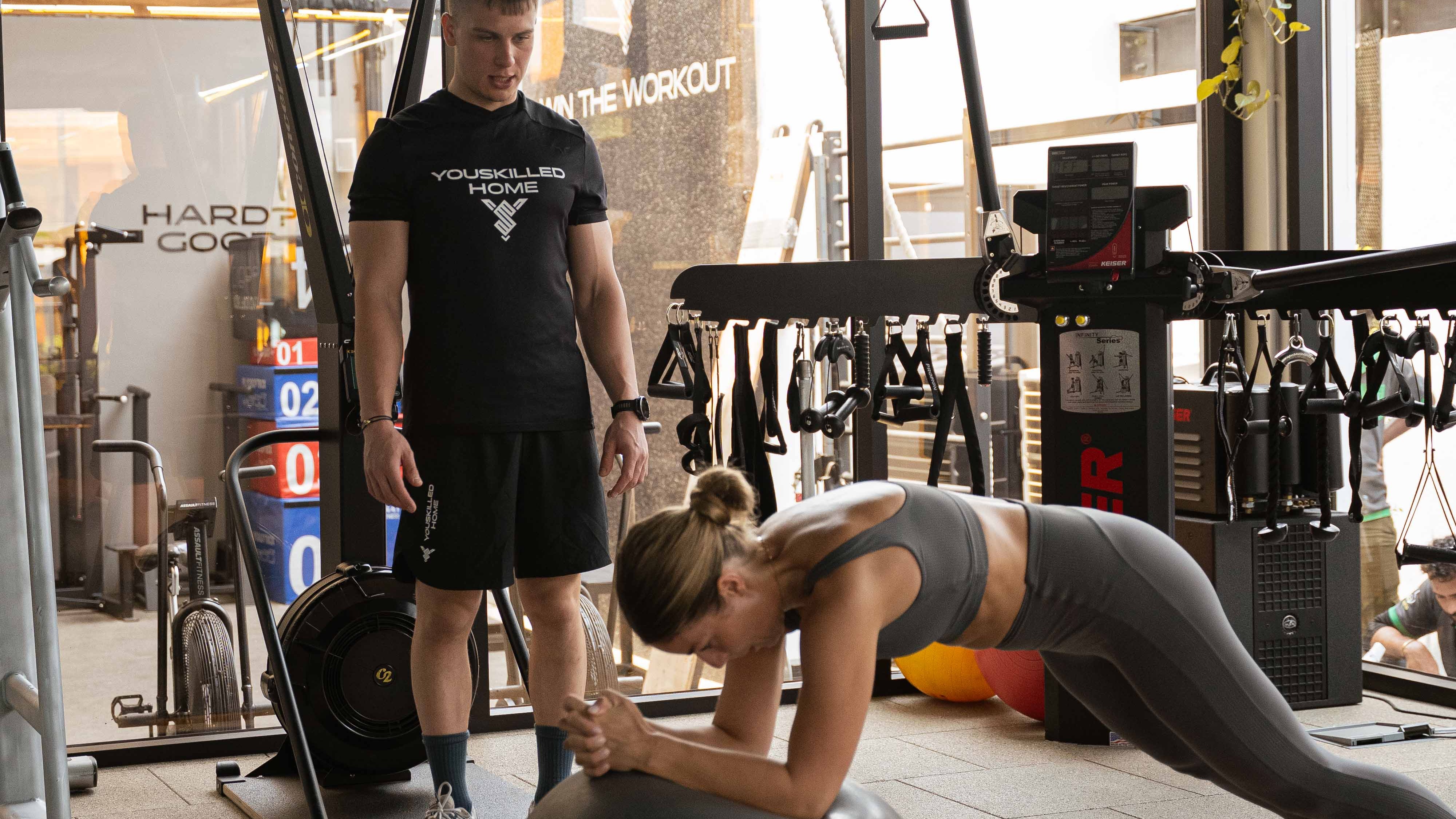

Why You Should Do Planks Every Day
What Is the Benefit of Plank Exercise?
In a world full of complex workouts, machines, and trending fitness hacks, one simple bodyweight movement continues to deliver lasting results: the plank.
Simple? Yes. Easy? Absolutely not, when done correctly. Doing planks every day doesn't just work your abs. It systematically improves your posture, your breath control, muscular endurance, joint health and even mental resilience. The key is understanding what a true plank is and how it fits in your long-term performance.
Plank Exercise Benefits Go Beyond Abs
The plank position is often misunderstood as just a core or ab workout. But in reality, it's a full-body isometric exercise that trains the entire kinetic chain. Done right, planks challenge everything from your shoulders to your toes.
Here’s a breakdown of what a proper plank engages:
- Anterior core: Prevents lower back overextension.
- Glutes and hamstrings: Stabilize your pelvis.
- Quadriceps: Maintain front-side tension.
- Shoulders and scapula stabilizers: Support upper body structure.
- Neck flexors: Assist in keeping the spine aligned.
- Diaphragm: Supports controlled breathing under pressure.
What Does Plank Do to Your Body?
When you perform a plank with intent—squeezing your glutes, locking your quads, pushing the ground away, and breathing through the brace—it becomes a total body isometric challenge.
The benefits of plank include:
- Improved core function
- Better breath control
- Increased muscular endurance
- Enhanced posture
- Joint protection
- Mental resilience under stress
A strong core isn’t just for aesthetics. It's about function. The core’s primary job is to resist movement, not just create it. Think of it as your body’s internal suspension system. It transfers force between your upper and lower body.
Why You Should Do Plank Exercise Daily
Daily plank training builds anti-extension strength (preventing lower back sag), anti-rotation control (protecting the spine), and anti-lateral flexion stability (keeping your torso aligned).
These benefits directly carry over to:
- Deadlifts and squats: Better bracing, reduced lumbar extension
- Push-ups and overhead presses: Less rib flare, stronger scapula positioning
- Running and jumping: Improved pelvic control
- Pull-ups and carries: Better energy transfer through your trunk
Plank Variations for Greater Challenge
Once you've mastered the standard plank, try adding progression:
- Side plank – Focuses on obliques and anti-rotation.
- Reverse plank – Strengthens the posterior chain and opens the chest.
- Weighted plank – Increases core strength by adding external resistance.
Each variation targets slightly different plank exercise muscles worked, helping you stay well-rounded in strength and stability.
Plank Benefits for Females and Males
Whether you're male or female, the plank benefits apply across the board. But for women specifically, this low-impact, high-benefit move is great for:
- Postural alignment
- Reducing lower back pain
- Strengthening the pelvic floor
- Enhancing core stability postpartum
Because it’s low-impact and requires no equipment, the plank exercise benefits both beginners and advanced fitness levels.
How to Do Plank Correctly
To perform a basic plank:
- Get into a forearm position, elbows under shoulders.
- Extend your legs straight behind, toes tucked.
- Squeeze your glutes and quads, keep your body in a straight line.
- Engage your core—don’t let your hips sag.
- Breathe steadily through your diaphragm.
Start with 30 seconds and work your way up. As you progress, increase the duration or switch to a weighted plank or side plank.
Mental Benefits of Planking
A 60-second plank under full tension is more than just physical, it’s mental. It teaches you how to manage your breath, stay calm under load, and resist the urge to quit. We call it meditation under stress.
This mental toughness carries over to lifting, cardio, and everyday life. Staying focused while under physical strain builds emotional resilience, too.
Plank for Rehab and Injury Prevention
If you’ve ever asked, what does plank exercise do in rehab? Here's your answer:
- Reduces lower back pain
- Improves shoulder and hip alignment
- Corrects knee tracking via glute engagement
- Lessens upper trap and neck tension
Every great rehab or prehab program begins with spinal control and core activation. The plank is one of the best tools for both.
Final Thoughts
Still wondering what is the benefit of plank exercise? The truth is, few movements offer as much with as little. From core strength and posture to breath control and injury prevention, the plank is a must-have in your daily routine.
So the next time you’re short on time or equipment, drop into a plank position, hold steady, breathe with control, and feel the full-body benefits build up, one second at a time.